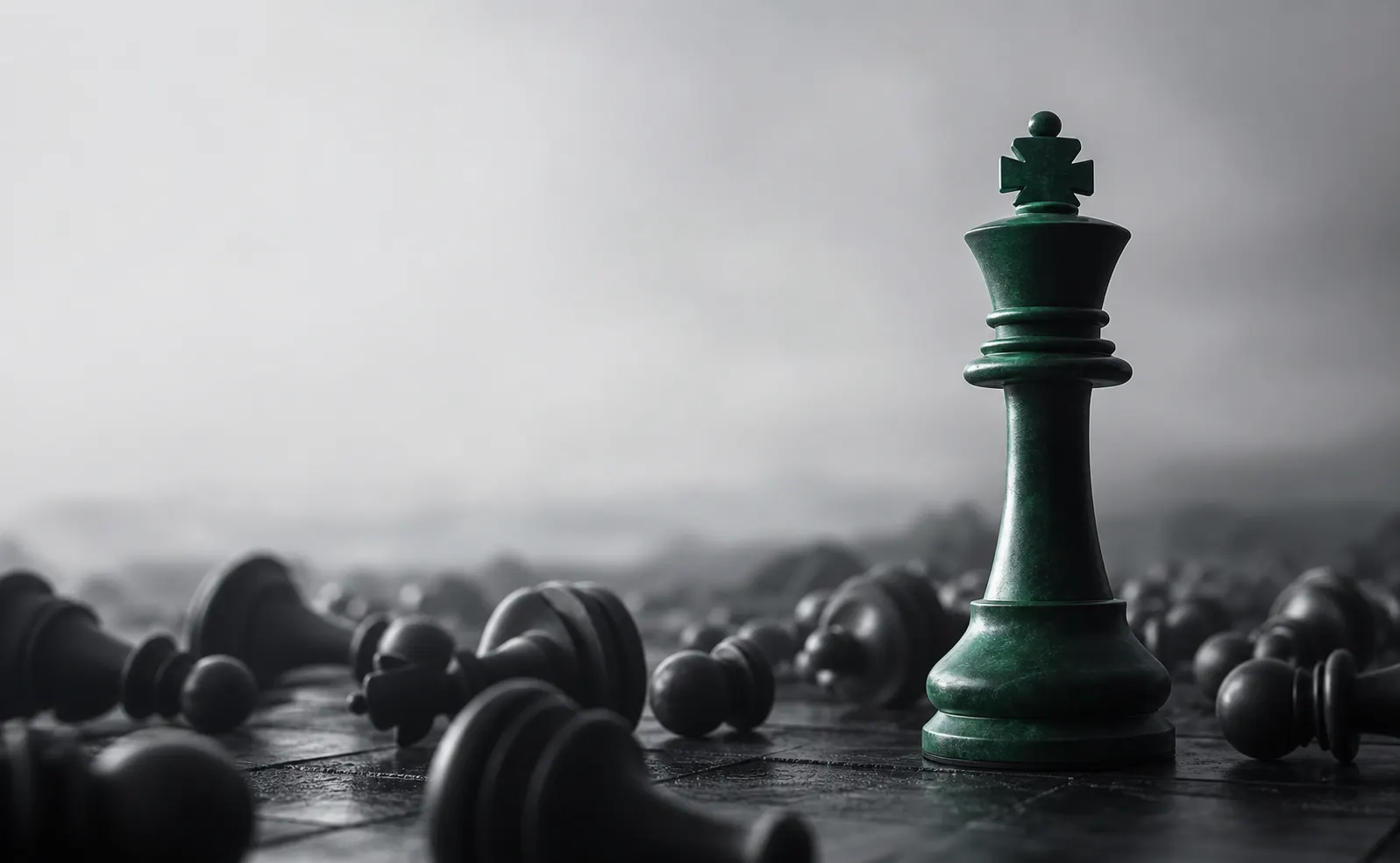
Strategy is not a plan. It is an architecture of thought — one that turns the courage to decide, in the middle of uncertainty, what you will not do into a working system.
When I say this in meeting rooms, there is usually a silence first. Most organizations mistake strategy for a document: goals, timelines, colorful charts. But that document is only the shadow of the real work. The real work is being able to say no to nine of the ten attractive options on the table. An organization that has not learned to say no holds a strategy document no different from a wish list.
The Illusion of Motion
The most common disease I see is this: mistaking motion for progress. The calendar is full, the inbox is overflowing, everyone is running. But no one stops to ask — where to? Operations are a current that swallows people. Inside it, you feel fast; from the shore, you can be seen treading water in the same spot.
This has a price, and because it is invisible, nobody volunteers to pay it. Busyness is the most respectable disguise for not thinking; a full calendar keeps anyone from asking whether the direction is wrong. The comfort of being busy hides the cost of being directionless — until the bill arrives.
Strategic thinking begins exactly here: climbing out of the current and onto the shore. Stepping back is not passivity; it is gaining altitude. A good strategist flies at two altitudes at once — sees the big picture, but does not get lost when descending into the detail. Stay only at altitude and you become a dreamer; stay only on the ground and you become a clerk. Neither produces strategy.
An Architecture of Elimination
Thought alone is not enough; it has to be cast into structure. My way of working has three steps: Thought, Structure, Solution. Strategy is the structure in the middle of that chain — the skeleton that turns scattered intentions into decidable questions. And the load-bearing column of that skeleton is the discipline of elimination.
A plan tells you what to do; strategy tells you what you will never do.
That is why clarity is non-negotiable. A blurry goal produces a blurry result — not as a risk, but as a certainty. Once the goal is clear, priority comes next: whoever tries to do everything at once finishes nothing properly. When I put a decision on the table, I ask myself three questions:
- If we don’t do this, what do we actually lose — reputation, revenue, or just pride?
- Does this decision have to be made today, or is a sense of urgency making it for us?
- Does this path grow who we will be in three years, or does it merely dress up this quarter’s report?
All three questions serve the same function: they filter out noise. If the answers are clear, the decision has already been made; if they refuse to clarify, the problem is not the decision but the goal. You go back and sharpen the goal.
Loyalty to Direction
Flexibility is the most misunderstood part of strategy. Loyalty to the plan is treated as a virtue; but clinging to a plan when conditions have changed is not loyalty — it is stubbornness. My measure is this: stay loyal to the direction, not the route. The destination is fixed; the path to it is redrawn as new information arrives. Those who call this weakness are confusing the map with the terrain. The terrain always beats the map, and accepting that is the strategist’s test of maturity.
Then there is the matter of time. Short-term wins are always louder; the applause comes at once. Long-term value is quiet — like compound interest, it demands patience. What sets the strategic mind apart is not intelligence but the capacity to endure that silence. Whoever sells tomorrow’s ground for today’s applause eventually loses both.
And yes, this is a muscle. No one is born a strategist; there is only judgment, exercised daily. My daily exercise is a single question: did today’s work move me toward the goal, or did it merely keep me busy? The question is merciless, because most days you will not like the answer. But the shift from unconscious drift to conscious direction begins exactly in that discomfort.
Producing clarity inside complexity; turning chaos into structure and structure into solutions — that is my work. It is also strategy’s.